


CAS submits input to the European Commission on bullfighting
08-04-2026The European Commission is currently evaluating the Common Agricultural Policy (CAP) 2023–2027 and invited input from stakeholders and European citizens via its website. CAS International has submitted its input regarding European agricultural subsidies and bullfighting.
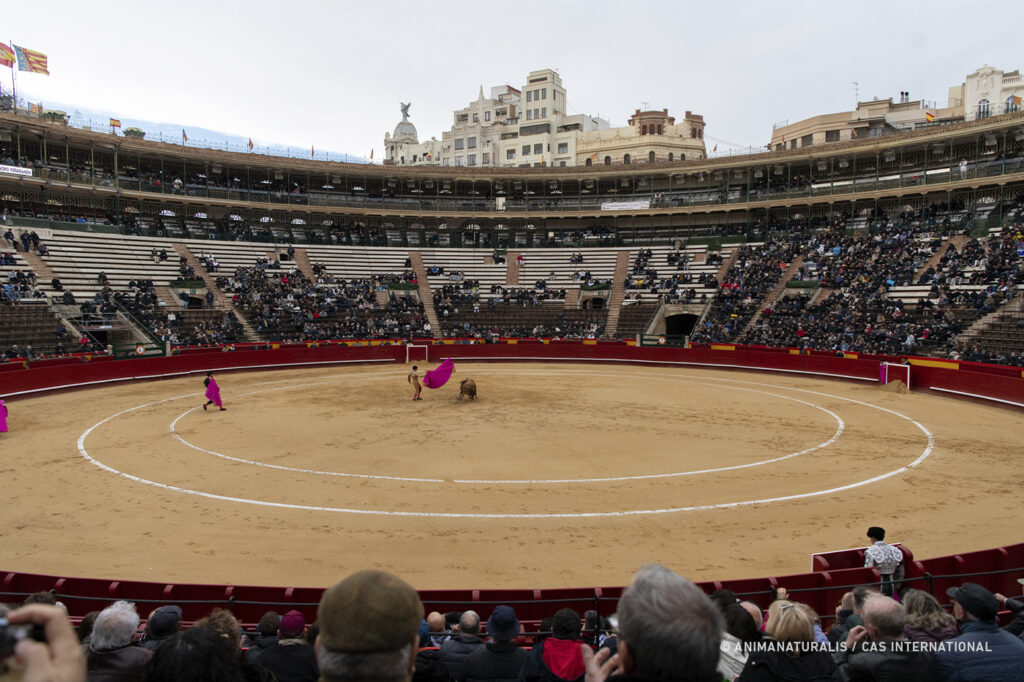
CAS submits input to the European Commission on bullfighting | Picture: AnimaNaturalis, CAS International
Since 1962, the CAP has been a cornerstone of EU policy, aimed at supporting farmers and ensuring food security in Europe. The European Commission requested feedback from European citizens and stakeholders on the CAP 2023–2027.
This was done through Have Your Say, a platform of the European Commission where citizens, organizations, and stakeholders can express their views on policies, legislation, evaluations, or other EU initiatives. The platform is intended to promote transparency and increase public participation in the EU decision-making process.
CAS input
CAS International submitted its own feedback on the adjustments needed in the CAP in relation to bullfighting:
We would like to respond to this call for evidence in relation to CAP payments that are used for the breeding of bulls and cows intended for bullfighting and related events.
EU citizens care about animals and their welfare. When it comes to animal welfare in relation to CAP-payments it is striking that these payments are still used by breeders of bulls and cows intended for bullfighting and related events. This is a fundamental misuse of instruments intended to raise welfare standards.
Bullfighting continues to cause immense suffering to thousands of animals each year. The practice is still present in Spain, Portugal and France. Based on the annual Member State data, it can be estimated that around 10.500 bulls are killed in arenas every year in the EU. This does not include the many bull festivals, such as folk and patronal festivals, which use animals in public spectacles outside traditional arenas. In Spain alone, 18,000 of these festivals take place annually, involving an estimated 30,000 animals.
Bullfights and bull festivals cause severe suffering to bulls, cows, calves, and horses. Bulls never survive a fight; they are repeatedly stabbed, thus being killed slowly and painfully, more often than not in front of spectators.
Every year, an estimated 200 million euros in subsidies from the Common Agricultural Policy (CAP) are allocated to breeders of bulls (toro de lidia or toro bravo) intended for bullfighting. These breeders can access various CAP schemes, including Area-Based Income Support Payments, Coupled Income Support, and Eco-schemes. However, tracking exactly how much funding individual breeders in Spain, France, and Portugal receive, and through which schemes, proves difficult, if not impossible. This is due to the way payments are recorded and the lack of public transparency. Even databases such as www.farmsubsidy.org only provide data that is publicly available, leaving significant gaps in understanding the full scale of support.
The breed of bulls and cows used for bullfighting, including associated festivals, is the toro de lidia (also known as toro or ganado bravo). These animals are bred exclusively for bullfighting and registered under a special system.
The bullfighting sector often argues that banning bullfighting would put the breed at risk of extinction. However, the reality of how these animals are used undermines this claim. Only a portion of the herd is suitable for bullfighting or breeding; the rest are slaughtered for meat. While the sector cites meat production as a reason to justify subsidies, this is a secondary purpose of breeding these animals. The primary purpose of the breed remains bullfighting, meaning that subsidies primarily fund a cruel spectacle, while genuine agricultural activity is only a secondary consideration.
The upcoming CAP 2028-2034 offers a historic opportunity to modernize the CAP and ensure it reflects the ethical standards of the 21st century. We believe that European agriculture should be a source of pride, not a silent financier of animal torture. We ask to:
(1) Explicitly exclude toro de lidia breeders from eligibility for any CAP direct payments or rural development funds.
(2) Ensure funding supports genuine agricultural activity aligned with CAP objectives.
(3) Strengthen Accountability and Transparency: ensure that strategic plans include rigorous oversight to prevent the diversion of livestock subsidies to the bullfighting sector and make sure CAP-payments become more transparent and verifiable.
(4) Prioritize Animal Welfare: Align the next CAP with the highest standards of animal welfare, ensuring that EU agriculture serves as a global model of compassion and sustainability.
CAS International also encouraged its partner organizations and supporters to submit their own feedback. The deadline for submitting feedback to the European Commission has now passed.
Petition against EU subsidies
Did you know that your tax money is being used, through European agricultural subsidies, to breed cattle for bullfights and cruel folk festivals in Spain, France, and Portugal?
It is estimated that around €200 million per year is involved. We believe this must stop. Therefore, CAS International, with support from the animal organizations AnimaNaturalis (Spain) and ANIMAL (Portugal), has launched a petition aiming to end European agricultural subsidies for bull breeders. Sign our petition here!
Help us so we can continue with our impactful campaigns and protests! Donate one time or become a sponsor.


