


Portugal launches public consultation on bullfighting as intangible cultural heritage
07-10-2026On 2 October, the Portuguese government launched a public consultation on whether bullfighting should be recognised as intangible cultural heritage. CAS International has sent a letter to the Portuguese heritage authority Património Cultural, I.P., outlining our objections to the recognition of bullfighting as cultural heritage. We have also sent a letter on behalf of the International Anti-Bullfighting Network, which consists of more than 60 organisations from 12 countries.
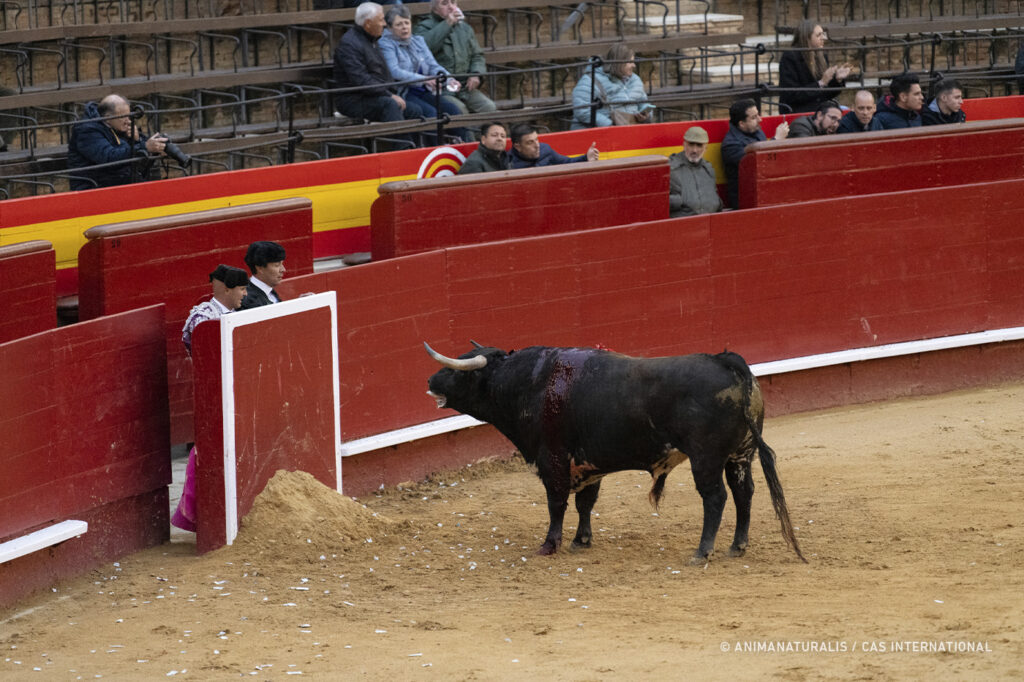
Portugal launches public consultation on bullfighting as intangible cultural heritage | Picture: CAS International, AnimaNaturalis
The public consultation concerns the proposed inclusion of ‘Corrida de Toiros em Portugal’ (bullfighting in Portugal) in the National Inventory of Intangible Cultural Heritage. Five years ago, the Portuguese Association of Tauromachy Clubs (Associação de Tertúlias Tauromáquicas de Portugal) submitted an application for its inclusion. In 2022, the then Directorate-General for Cultural Heritage subsequently requested that the application be supplemented and revised.
The public consultation lasts 30 days, and closes on 13 November. After the consultation closes, Património Cultural, I.P. has 120 days to make a decision.
Animal suffering
CAS International has asked the Portuguese heritage authority to consider not only the historical and cultural significance of bullfighting, but also the animal suffering that is inherently associated with it.
Inclusion in the National Inventory is more than a symbolic recognition. If bullfighting is recognised as cultural heritage, it will receive protection, and measures will be taken to support the preservation of the tradition. Spain declared bullfighting cultural heritage in 2013. Since then, the country has made additional funding available for the protection of bullfighting as a tradition.
Animals are sentient beings
Article 201-B of the Portuguese Civil Code recognises animals as living beings endowed with sentience and entitled to legal protection by virtue of their nature. European law also recognises animals as sentient beings. In our letter, we stated that this development should be taken into account when assessing bullfighting as intangible cultural heritage.
Bulls killed out of public view
Bullfighting in Portugal (touradas or corridas de touros) differs from bullfighting in Spain in several respects. A regular Portuguese corrida generally involves six bulls. The main difference from Spanish-style bullfighting is that the principal bullfighter (cavaleiro, or bullfighter on horseback) fights the bull from horseback. The bulls are also generally not killed in the arena in front of the public, but are taken to a slaughterhouse after the event.
Under Portuguese regulations, the animals must be slaughtered there within a maximum of five hours after the bullfight has ended. In practice, this means that severely injured bulls may sometimes have to wait for hours before they are put out of their suffering.
Help us so we can continue with our impactful campaigns and protests! Donate one time or become a sponsor.


